
Boat Life · Cape Coral
How to Read a Cape Coral Canal Before You Book or Buy
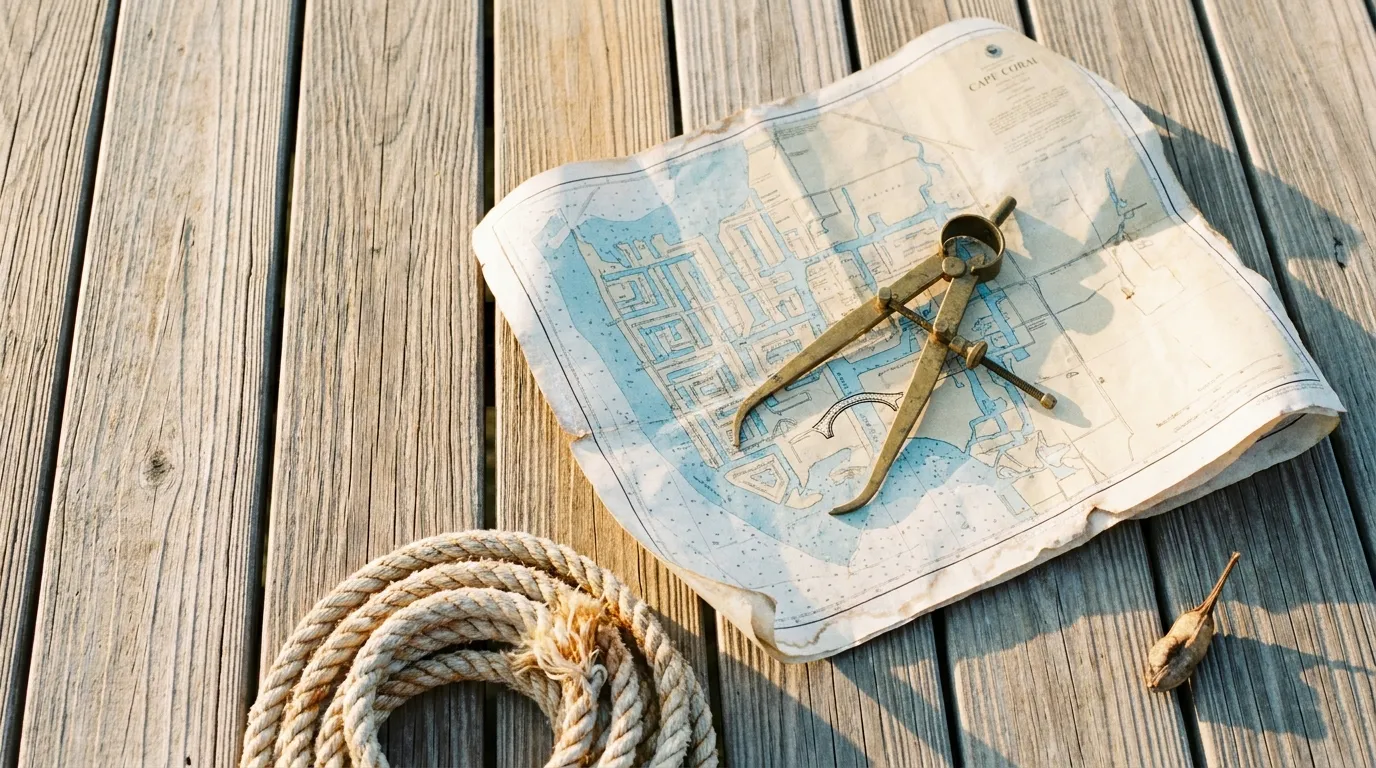
Most people find out their canal does not really reach the Gulf after the boat is on the trailer. This is a checklist for doing that homework first — whether you are booking a week with a dock or writing an offer on a house.
Cape Coral has more than 400 miles of canals by the City's own count. What that number hides is that not all of them connect. Some go to open water. Some end at a fixed bridge your boat cannot pass under. Some are freshwater and do not touch salt at all. Gulf access is a claim about water, not about your boat.
Step 1: Find out which canal system the address sits on
Cape Coral has five separate saltwater canal systems, labelled SW-A through SW-E, plus a landlocked freshwater system. Your canal may not connect to your neighbour's. Two houses on adjacent streets can be on completely different water.
Before you go further, ask the listing agent or rental host one question in writing: which saltwater system is this property on, and does it reach the Gulf without a fixed bridge? If the answer is vague, that is the answer.
A "Gulf access canal" and a "direct Gulf access canal" are not the same phrase. Direct means no fixed bridges between you and open water. Read the word direct as if it were doing all the work, because it is.
Step 2: Check every bridge between the dock and open water
The City of Cape Coral publishes vertical clearance for 122 of its 159 bridges. Over saltwater canals, clearances run roughly 7.9 to 11.75 feet. That range is the difference between taking a center-console out on a whim and needing to plan around low tide with the T-top folded.
Walk the route on a satellite map. For every bridge between the property and the river or the Gulf, do three things:
- Note the published clearance, if one exists.
- Measure your boat's height at its tallest fixed point — antenna, bimini, T-top, radar arch.
- Subtract at least a foot for high tide and chop under the bridge.
If any bridge on the route is shorter than your boat plus that margin, the property is not Gulf access for you. It may be for a lower boat. It is not for yours.
Step 3: Understand what the tide does to your clearance
Published bridge clearances are usually measured at mean high water. On a spring high tide, you lose inches. On a low tide, you gain them. That matters most on the borderline bridges — the ones you would clear on a calm morning and scrape on a windy afternoon.
If you are renting for a week and bringing a boat, look up the tide chart for the closest station for your dates. If you are buying, do it for the season you plan to use the house most. A snowbird using the boat January through April is looking at a different tide pattern than a summer visitor.
Step 4: Look at the seawall and the dock, not just the water
A canal-front lot is not the same as a usable one. Check for:
- Seawall condition. Cracks, bulges, or sections that lean toward the water are expensive. Ask when it was last inspected.
- Dock and lift. A 10,000 lb boat lift, like the one on the Adventure Package house, tells you the previous owner ran a real boat here. No lift, or a lift rated for a jet ski, tells you something too.
- Width and turning room. Some finger canals are narrow enough that turning a 22-foot pontoon takes three tries. Look at how wide the canal is directly in front of the dock.
Step 5: For rentals, ask the owner to time the run to open water
Photographs cannot answer this. Owners who actually run their own boats can. At the Adventure Package house in SW Cape Coral, the run to the open Gulf is three minutes by boat, measured by the owners themselves. That is the shape of an answer you want — a number, from someone who has done it, not a marketing phrase.
If the host cannot tell you how long the run takes or which bridges are on the route, they are not the person cleaning the pool and answering the phone. That is worth knowing before you book.
Step 6: For buyers, put the canal question inside due diligence
None of the above replaces a proper inspection period. What it does is stop you falling in love with a house whose water does not do what you need. Stephanie will pull the canal system, check the bridge route on the way to a showing, and say out loud whether the boat you described in the first call actually fits.
She would rather lose the sale than watch you buy on a canal your boat cannot get out of.
What this post does not do
This is a checklist for reading a canal, not a legal or engineering opinion. Bridge clearances change with resurfacing and repair. Seawall condition needs a marine contractor, not a blog post. Nothing here is investment or tax advice. If you are buying, put every one of these questions to a licensed inspector and to your agent in writing.
The short version
Which system. Which bridges. Which tide. Which seawall. Which run time. Five questions, in that order, before the deposit or the offer. If you want the water checked for a specific address, send Stephanie the address before you fall for the photos. If you are choosing between our three homes and want to know which one fits the boat you are bringing, come see it from the dock.
General information only. Not legal, tax, or insurance advice. Equal Housing Opportunity. Brokerage: Experience Real Estate Group, LLC, license 258024795.